
The door starts down, stops, goes back up and the light flashes. Nine times in ten it's the two small eyes at the bottom of the track, and most of the fixes take five minutes.
Tell us what the door is doing. The estimate is free and you can say no.
Every opener installed since 1993 has a pair of photo-eye sensors about six inches off the floor, one each side of the opening. One sends an invisible beam, the other receives it. If anything breaks that beam while the door is closing, the opener reverses. It's the feature that stops a door coming down on a child, a dog or a bumper, and it is deliberately quick to trip.
So when a door refuses to close and the opener light flashes, the opener is not broken. It's doing exactly what it should, on bad information. The job is to work out why the beam is being interrupted or why the eyes can't see each other.
The lights tell you which of the sections below to read. They also tell the technician what to bring if it comes to that.
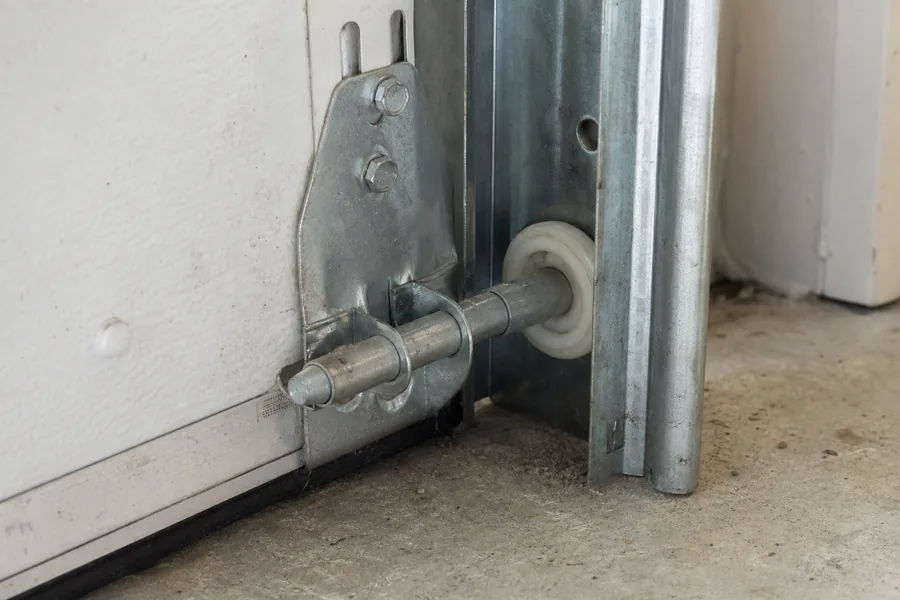
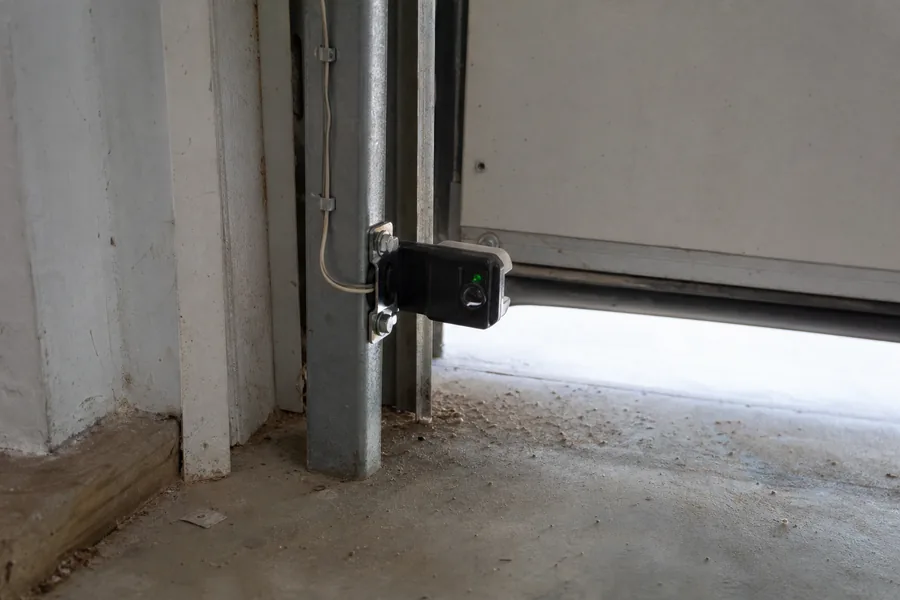
Do these before calling anyone. Most sensor calls end at step two.
If the eyes are dead and it's late, the opener still lets you close the door one way: press and hold the wall button (not the remote) until the door is fully down. That's the manufacturer's override, and it exists precisely for this. It only works from the wall control, and you have to keep holding it for the whole travel.
What not to do is tape the sensors together, point them at each other on a shelf or otherwise trick the opener into thinking the beam is intact. It works, and it leaves the door with no protection at all. If the eyes can't be made to work, the hold-to-close method gets you through the night and a technician the next day.
Both LEDs steady, the beam clear, and the door still reverses? Then the opener is reacting to something else. If it reverses just before the floor, the down travel limit is set a fraction too far and the opener thinks the floor is an obstruction. If it reverses part-way and the door feels heavy when you lift it by hand with the opener disconnected, the spring has lost tension and the force setting is tripping. The first is a small adjustment. The second is a spring job, and the opener should stop being used until it's done.
A door that reverses only in cold weather is a variation of the second: the door gets stiff, the force setting trips. A balance check settles it.
Sensors do fail outright. Water gets into a lens after years of splash from the driveway, a mower clips one, or a board inside gives up. Replacement pairs for Chamberlain, LiftMaster and Genie are standard stock and take twenty minutes to fit and align. Brands don't mix: a Genie opener needs Genie eyes, and the current LiftMaster eyes won't talk to a fifteen-year-old LiftMaster. The model label on the motor housing says which.
If the wiring is the problem, it's usually rerun along the wall with proper clips rather than staples. It's a small job, and one that stops the same fault coming back in a year.
One more thing worth knowing: the brackets. Sensors are meant to sit at the same height on both sides, four to six inches off the floor, and a bracket that has been bent by a bumper or a bin will drift out of line every few weeks no matter how carefully it's set. When that's the pattern, the technician replaces the bracket rather than realigning the eye a fourth time.
Check the beam, the lenses, the alignment and the wiring, in that order, because that's the order the faults come in. Replace the pair if a lens is cloudy or an eye is dead. Then, before leaving, disconnect the opener and lift the door by hand to check its balance, because a door that reverses often turns out to have two problems, and the sensors were only the one you could see. Free estimate throughout Allegheny County.
Most sensor calls are short. The ones that aren't are the ones where the door was heavy all along.
The opener is broken. The opener is fine; it's refusing to close on what looks like an obstruction. Fix what the sensors see and the opener behaves.
Just bypass the sensors. Don't. Hold the wall button to close it tonight, and get the eyes working tomorrow. A door without working sensors is the door that comes down on something.
New sensors mean a new opener. No. Sensors are a matched pair that plugs into the existing unit. Twenty minutes.
Usually neither. The dark one is the receiver and it goes dark when it can't see the sender: alignment, dirt or something in the way. Fix those first; replace only if it stays dark with a clear beam.
That's not the sensors. If the wall button works normally without holding it, the remote has a battery or pairing problem. If it only works when held, the sensors are the cause.
Yes, if you're comfortable with low-voltage wiring and can match the brand and generation. If not, it's a short visit and we bring the right pair.
Sun in the receiving eye. Shade it with a short hood, or swap the two sensors so the receiver faces the other way.
Free, across Allegheny County. If the sensors need replacing you hear it before anything is done.
A door that won't close is one of the calls we keep room for. Call and we'll say the slot right away.
Say where you are in Pittsburgh, get a two-hour slot, and the technician phones on the way. Same routine in Squirrel Hill, Shadyside and Robinson.
Free estimate. Throughout Allegheny County, including Squirrel Hill, Shadyside, Brookline, Mount Lebanon, Bethel Park, Monroeville, Robinson.
Tell us what the door is doing and you'll get a real arrival window. The visit and the estimate is free, anywhere in Allegheny County.
Prefer to talk it through? Call (412) 226-4206.
Tell us what the door is doing. The estimate is free and you can say no.